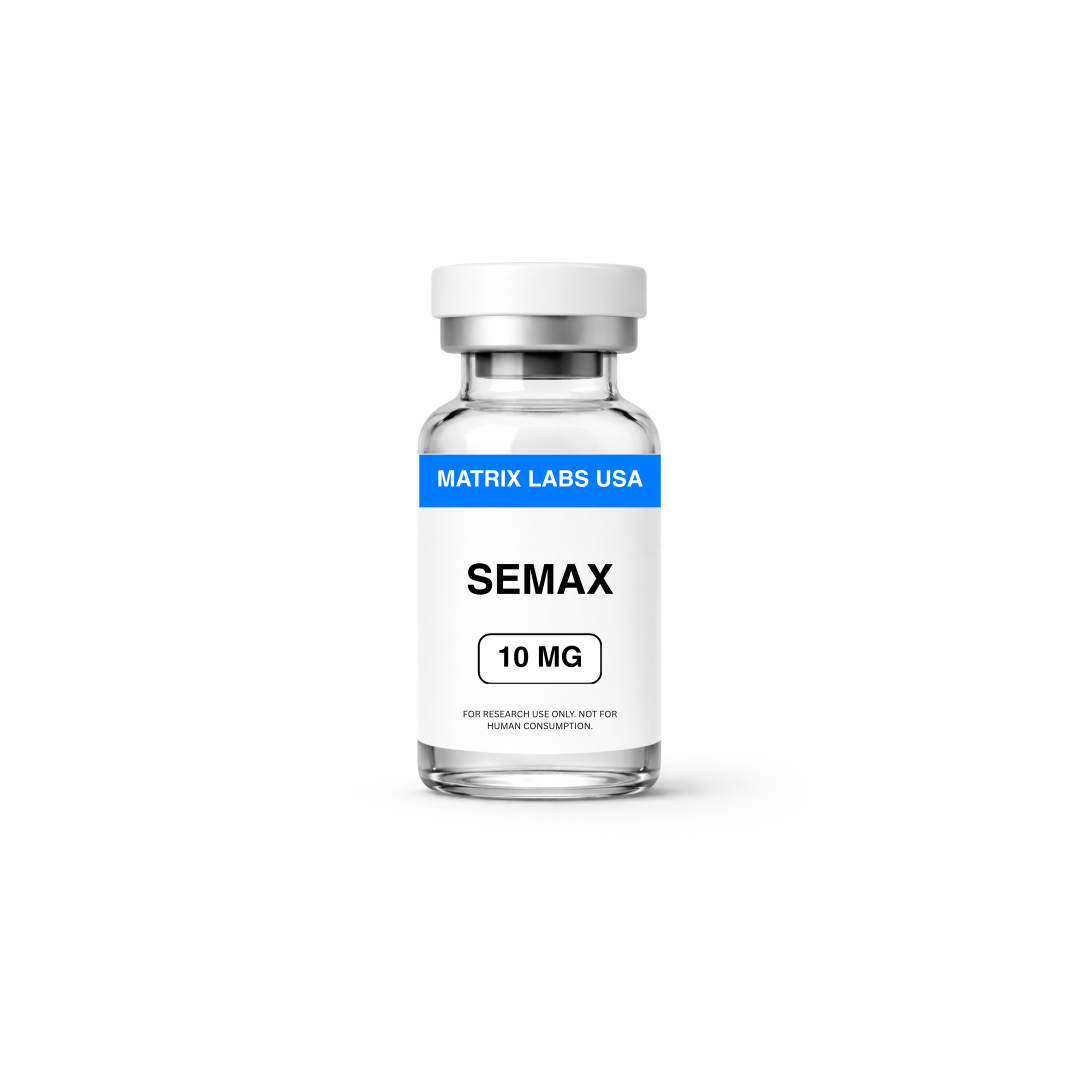
Semax
$50.00
Contents: 10mg Semax lyophilized in sterile glass vial
Purity: ≥99% (HPLC verified by independent third-party laboratory)
Grade: Research-use only (not a drug, food, or supplement)
Form: Lyophilized powder, suitable for reconstitution with appropriate solvent
Storage (before reconstitution): Store at room temperature, protected from heat and light
Storage (after reconstitution): Store refrigerated at 2–8°C/ 35–45°F and use promptly according to your lab protocol
Note: This product is supplied as a lyophilized powder and should be reconstituted with bacteriostatic water for appropriate research handling.
Most researchers also add BAC Water 3ML to their order for convenience.
For laboratory research only. Not for human consumption, medical, or veterinary use.
Semax is a synthetic peptide derived from a fragment of adrenocorticotropic hormone and was originally developed in Russia for neurobiological research. It has gained attention in nootropic and neuroprotection-related settings due to its reported effects on cognition, stress response, and neurotrophic signaling. In research environments, Semax is often studied in relation to focus, resilience, and central nervous system support.
Note: This product is supplied as a lyophilized powder and should be reconstituted with bacteriostatic water for appropriate research handling.
Most researchers also add BAC Water 3ML to their order for convenience.
Semax is a short synthetic peptide based on the ACTH 4-10 fragment with structural modifications intended to improve stability and activity. It is commonly explored in neurochemical and behavioral research because of its interaction with pathways associated with brain-derived neurotrophic factor, monoamine regulation, and adaptive stress responses.
Semax has been explored in research involving:
• Cognitive performance and focus models
• Neuroprotection and stress adaptation
• Ischemic and hypoxic brain research
• Mood and behavioral resilience studies
• Nootropic and central nervous system signaling modelsIts profile makes it a recurring compound in experimental work involving cognition, recovery, and brain signaling.
Semax is believed to influence several central nervous system pathways, including neurotrophic signaling and monoamine-related regulation. Research has suggested effects on expression of brain-derived neurotrophic factor and other signaling molecules involved in neuronal adaptation and plasticity. It has also been studied for potential modulation of stress-related and inflammatory pathways in neural tissue.
Preclinical and translational studies, particularly from Russian literature, have examined Semax in models of ischemia, cognitive impairment, stress exposure, and neuroprotection. Experimental findings have suggested possible roles in supporting memory, attention, and neuronal resilience under stress conditions. Its reputation in nootropic circles largely stems from these early findings, though broader Western clinical adoption remains limited.
• Dolotov OV, et al. Semax, an analog of ACTH(4-10) with cognitive effects, regulates BDNF and TrkB expression in the rat hippocampus. This paper is one of the key mechanistic references linking Semax to neurotrophin signaling. 
• Shadrina MI, et al. Rapid induction of neurotrophin mRNAs in rat glial cell cultures by Semax. Useful for supporting discussion around Semax and early NGF/BDNF-related signaling changes. 
• Dmitrieva VG, et al. Semax and Pro-Gly-Pro activate transcription of neurotrophins and their receptors in ischemic models. Good reference for neurotrophic and gene-expression language.
• Filippenkov IB, et al. Novel insights into the protective properties of Semax under tMCAO conditions using RNA-Seq. Very useful for modern transcriptomic framing of Semax in stroke research. 
• Sudarkina OY, et al. Brain protein expression profile confirms the protective effect of Semax in rat cerebral ischemia-reperfusion. Good proteomic follow-up source for neuroprotective claims in preclinical models. 
• Dergunova LV, et al. Semax suppresses inflammatory gene expression in ischemic brain tissue. Useful if you want to mention anti-inflammatory or immunomodulatory signaling in stroke models.To protect experimental integrity, store peptides cold, dry, and shielded from light to minimize oxidation, contamination, and degradation. For near-term use, keep unopened material refrigerated at ≤4 °C (≤39 °F) and limit time at room temperature during handling. Lyophilized (dry) peptides can tolerate short periods at room temperature, but refrigeration is preferred for best stability and longevity. For longer-term storage, keep unmixed material frozen—−18 °C (0 °F) is acceptable, while −80 °C (−112 °F) is optimal for multi-month to multi-year preservation. Avoid frost-free freezers and repeated freeze–thaw cycles, which can accelerate breakdown. If reconstituted (in solution), use sterile buffer (ideally pH 5–6 when feasible), split into aliquots, and freeze (preferably −80 °C (−112 °F)) to reduce handling-related degradation.
All Articles and product information provided on this website are for informational and educational purposes only.
Popular products
-

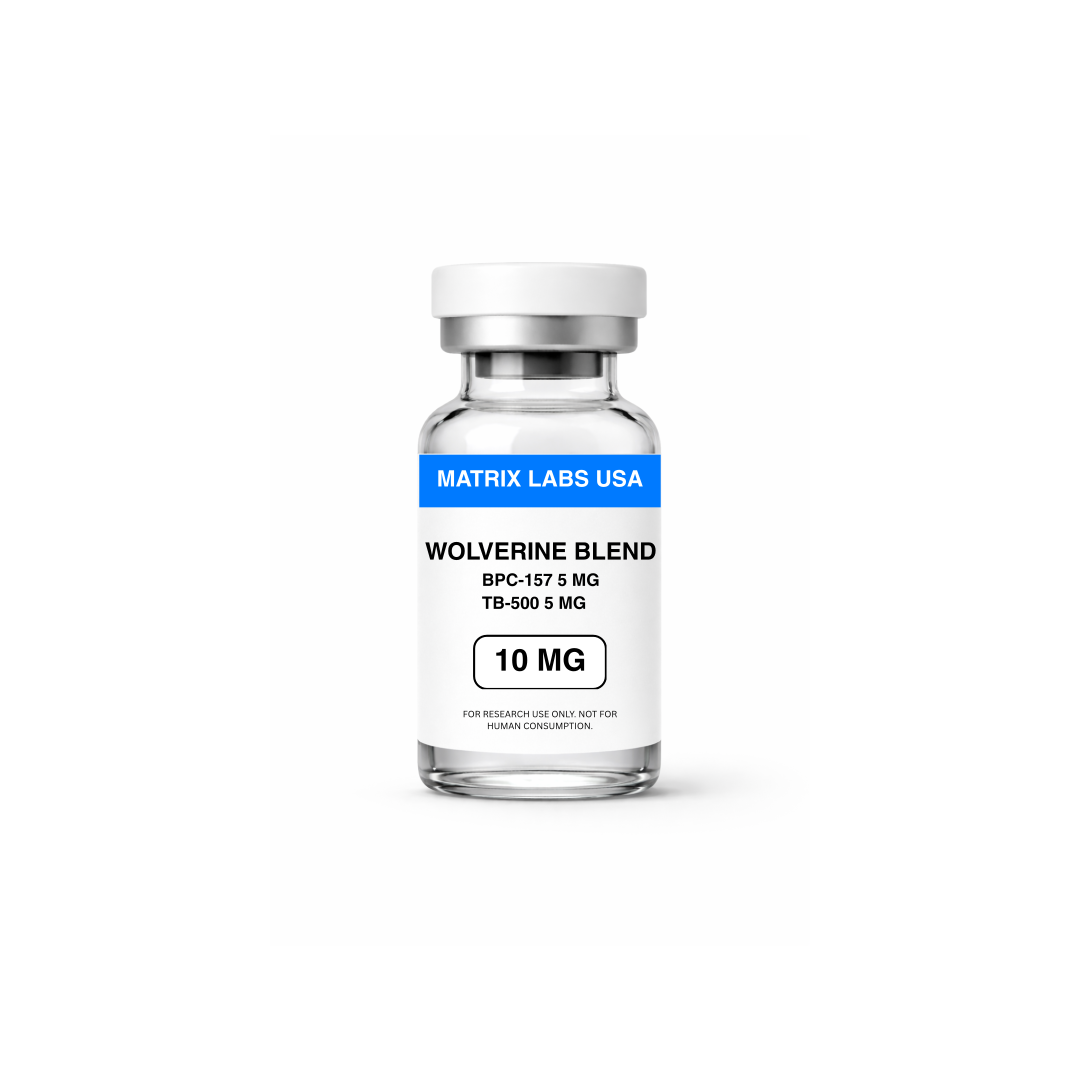
Wolverine
$100.00 Select options This product has multiple variants. The options may be chosen on the product page -
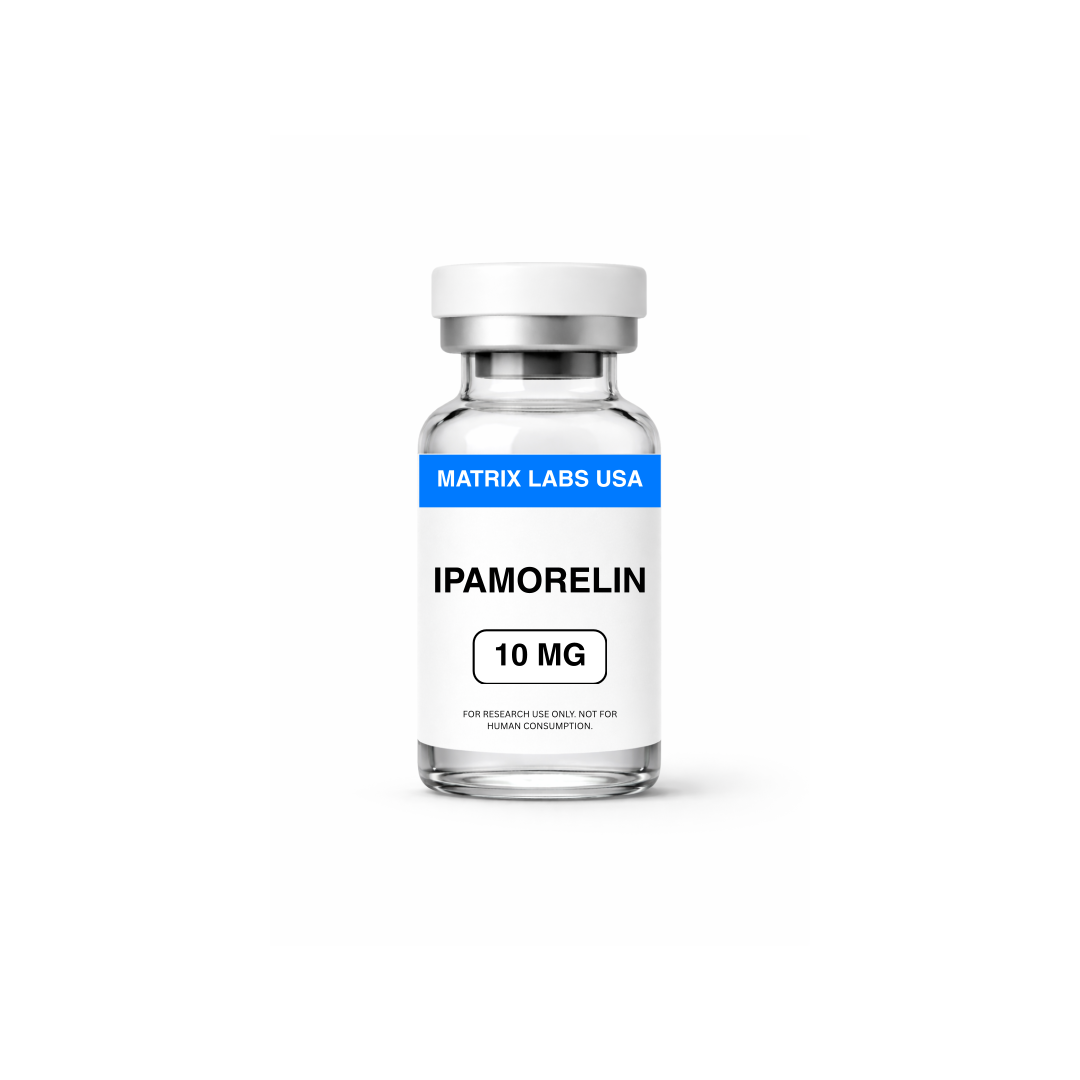
Ipamorelin
$55.00 Select options This product has multiple variants. The options may be chosen on the product page -
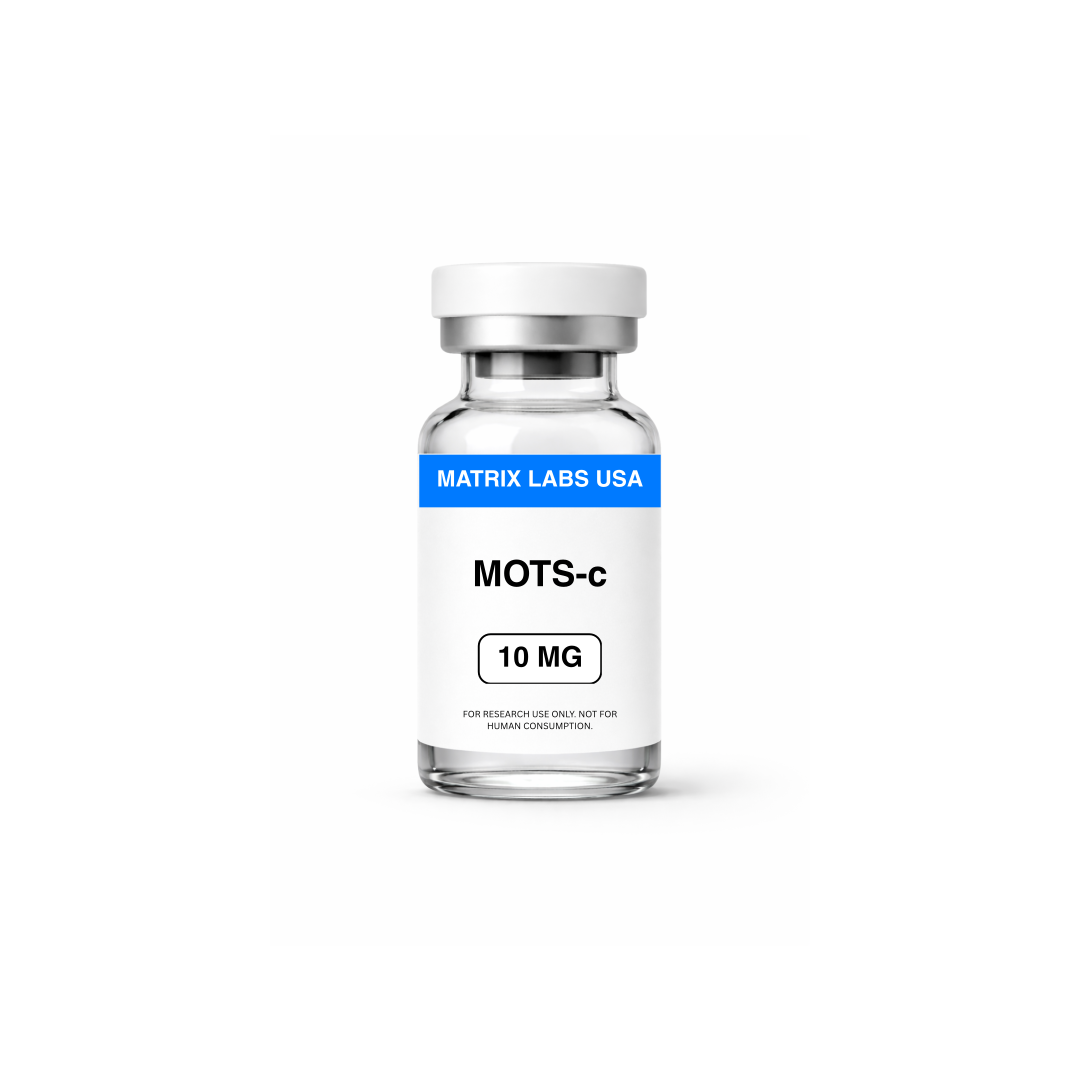
MOTS-c
$50.00 Select options This product has multiple variants. The options may be chosen on the product page -
Glutathione
$65.00 Select options This product has multiple variants. The options may be chosen on the product page
Reviews
There are no reviews yet.