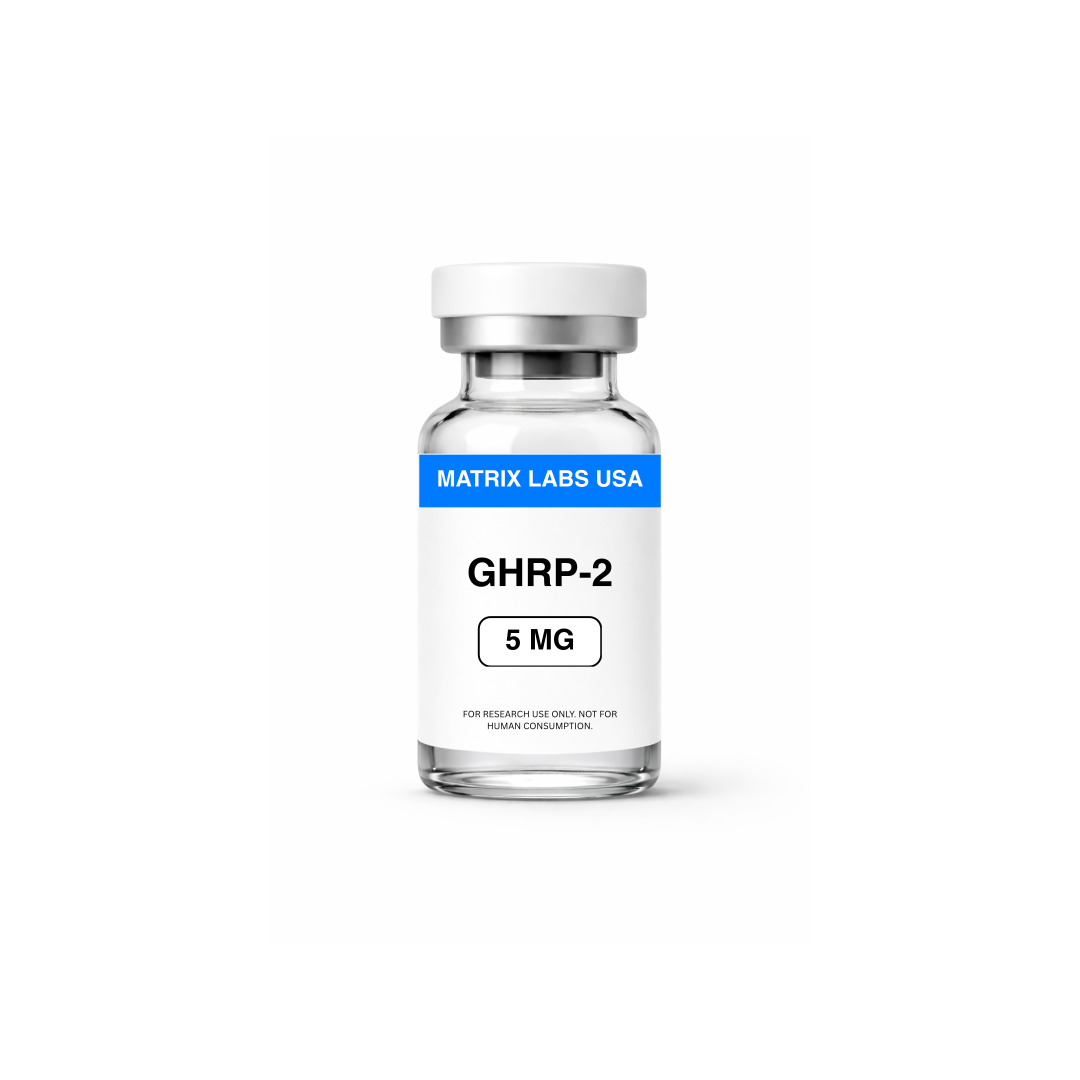
GHRP-2
$30.00
Contents: 5mg GHRP-2 lyophilized in sterile glass vial
Purity: ≥99% (HPLC verified by independent third-party laboratory)
Grade: Research-use only (not a drug, food, or supplement)
Form: Lyophilized powder, suitable for reconstitution with appropriate solvent
Storage (before reconstitution): Store at room temperature, protected from heat and light
Storage (after reconstitution): Store refrigerated at 2–8°C/ 35–45°F and use promptly according to your lab protocol
Note: This product is supplied as a lyophilized powder and should be reconstituted with bacteriostatic water for appropriate research handling.
Most researchers also add BAC Water 3ML to their order for convenience.
For laboratory research only. Not for human consumption, medical, or veterinary use.
GHRP-2 is a synthetic growth hormone secretagogue peptide studied for its ability to stimulate pulsatile growth hormone release. It is part of the broader class of ghrelin receptor agonists and has been widely used in experimental endocrine and metabolic research. Compared with newer secretagogues such as Ipamorelin, GHRP-2 is generally considered more potent but also less selective in downstream hormonal effects.
Note: This product is supplied as a lyophilized powder and should be reconstituted with bacteriostatic water for appropriate research handling.
Most researchers also add BAC Water 3ML to their order for convenience.
GHRP-2 is a small synthetic peptide belonging to the growth hormone releasing peptide family. It acts primarily through the growth hormone secretagogue receptor, also known as the ghrelin receptor. In laboratory settings, it is typically supplied as a lyophilized powder for reconstitution prior to controlled use in research protocols.
GHRP-2 has been explored in preclinical and translational research involving:
• Growth hormone axis stimulation
• Recovery and anabolic signaling models
• Appetite and feeding behavior research
• Endocrine pathway interaction studies
• Metabolic and body composition researchBecause it may influence multiple hormonal pathways beyond growth hormone alone, it is often used in comparative studies against more selective secretagogues.
GHRP-2 binds to and activates the growth hormone secretagogue receptor. This receptor is expressed in the pituitary and hypothalamus and plays a role in growth hormone release, appetite signaling, and neuroendocrine regulation. Activation of this pathway promotes release of growth hormone and may also affect prolactin, cortisol, and appetite-related signaling depending on dose and study design.
In experimental settings, GHRP-2 has been shown to stimulate robust growth hormone release and has been used in studies examining anabolic pathways, endocrine function, and metabolic regulation. It has also been investigated in models involving appetite control and neuroendocrine signaling. Compared with more selective agents, GHRP-2 is often noted for stronger GH release but broader hormonal activity.
• Bowers, C. Y. et al. Growth hormone releasing peptides and endocrine signaling research
• Ghigo, E. et al. Growth hormone secretagogues and pituitary hormone release
• Smith, R. G. et al. Ghrelin receptor biology and GH secretagogue mechanisms
• Camanni, F. et al. Comparative studies of GHRP compounds in endocrine modelsTo protect experimental integrity, store peptides cold, dry, and shielded from light to minimize oxidation, contamination, and degradation. For near-term use, keep unopened material refrigerated at ≤4 °C (≤39 °F) and limit time at room temperature during handling. Lyophilized (dry) peptides can tolerate short periods at room temperature, but refrigeration is preferred for best stability and longevity. For longer-term storage, keep unmixed material frozen—−18 °C (0 °F) is acceptable, while −80 °C (−112 °F) is optimal for multi-month to multi-year preservation. Avoid frost-free freezers and repeated freeze–thaw cycles, which can accelerate breakdown. If reconstituted (in solution), use sterile buffer (ideally pH 5–6 when feasible), split into aliquots, and freeze (preferably −80 °C (−112 °F)) to reduce handling-related degradation.
All Articles and product information provided on this website are for informational and educational purposes only.
Popular products
-

BPC-157
$70.00 Select options This product has multiple variants. The options may be chosen on the product page -
GHK-CU
$100.00 Select options This product has multiple variants. The options may be chosen on the product page -
NAD+
$125.00 Select options This product has multiple variants. The options may be chosen on the product page -
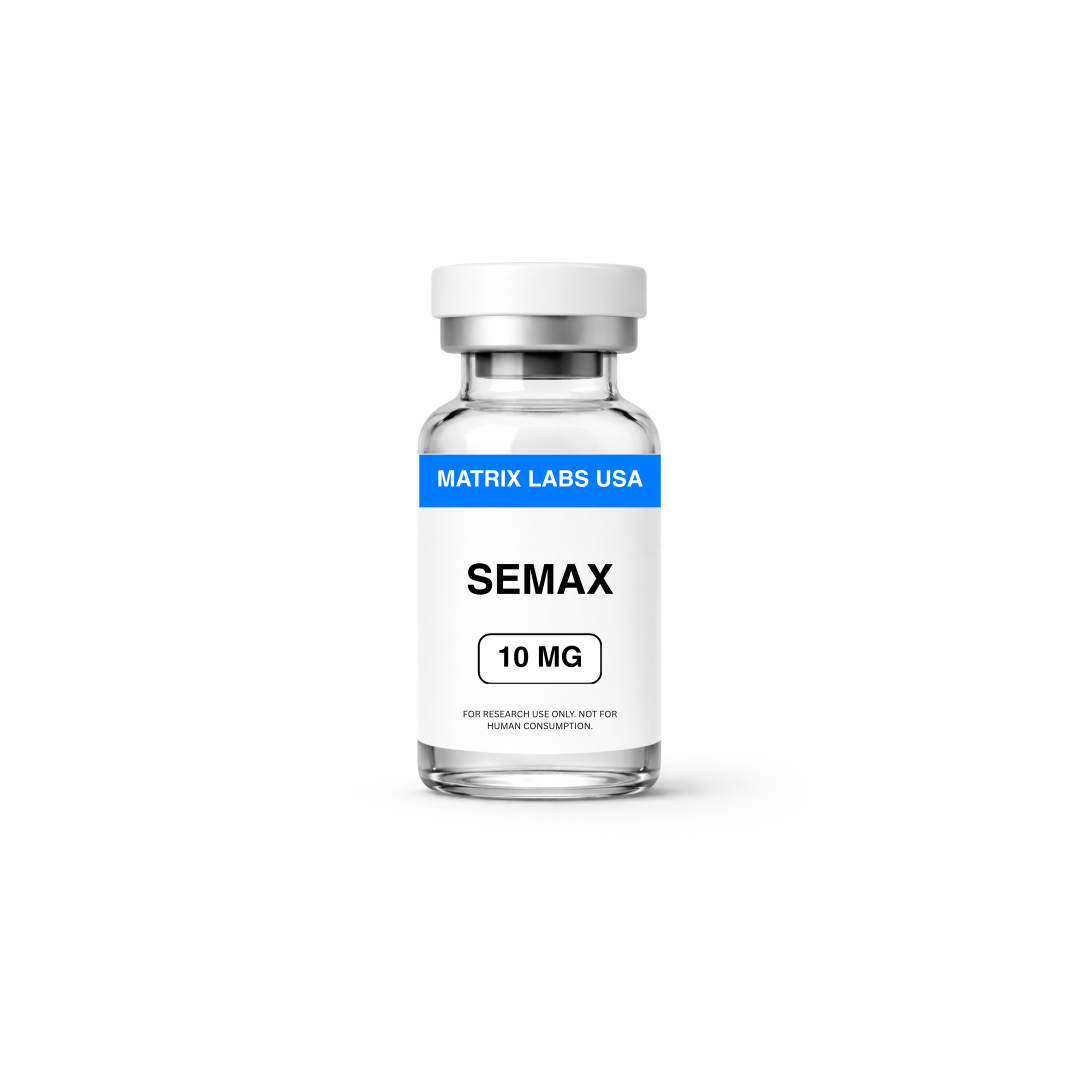
Semax
$50.00 Select options This product has multiple variants. The options may be chosen on the product page
Reviews
There are no reviews yet.