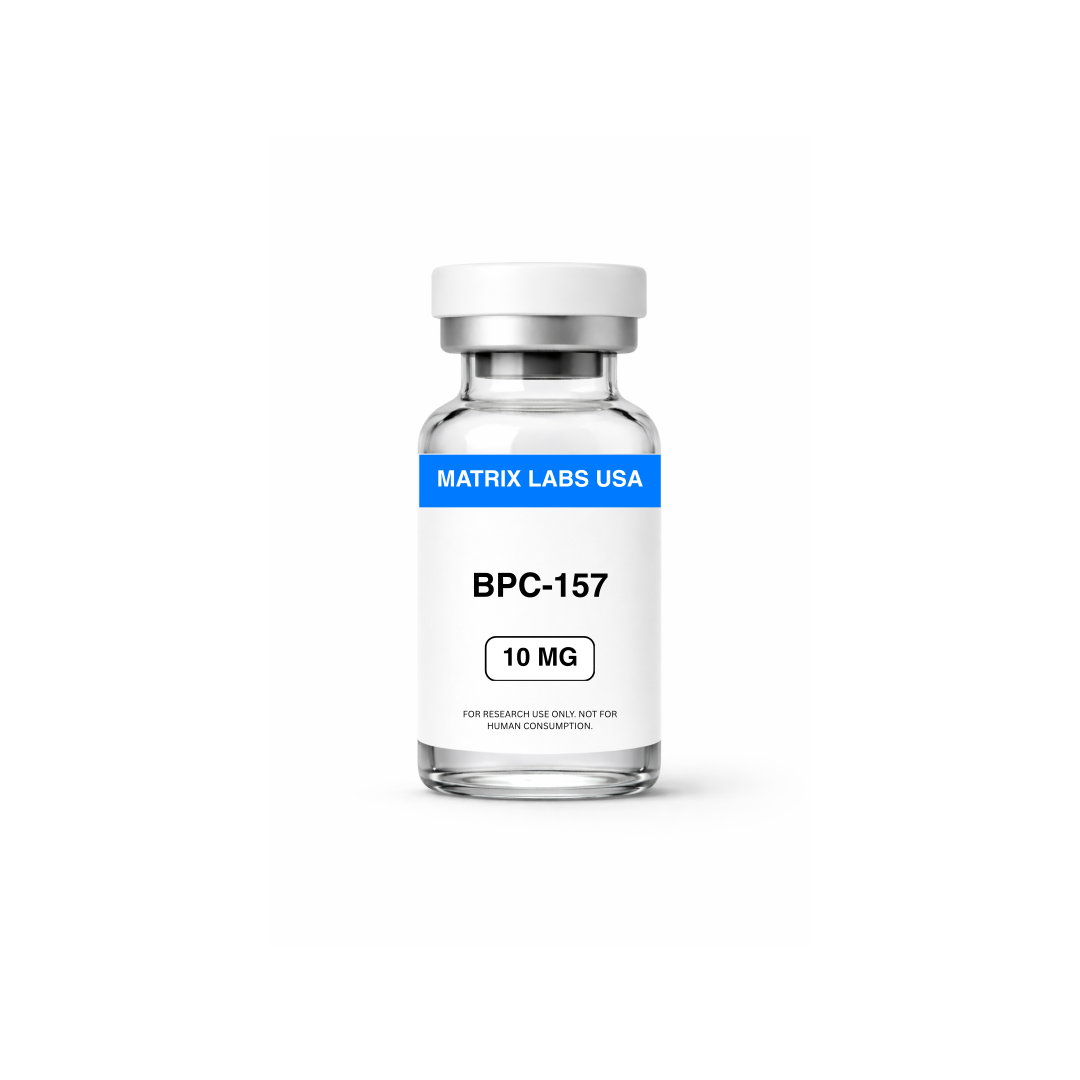
BPC-157
$70.00
Contents: 10mg BPC-157 lyophilized peptide in sterile glass vial
Purity: ≥99% (HPLC verified by independent third-party laboratory)
Grade: Research-use only (not a drug, food, or supplement)
Form: Lyophilized powder, suitable for reconstitution with appropriate solvent
Storage (before reconstitution): Store at room temperature, protected from heat and light
Storage (after reconstitution): Store refrigerated at 2–8°C and use promptly according to your lab protocol
Note: This product is supplied as a lyophilized powder and should be reconstituted with bacteriostatic water for appropriate research handling.
Most researchers also add BAC Water 3ML to their order for convenience.
For laboratory research only. Not for human consumption, medical, or veterinary use.
BPC-157 (Body Protection Compound-157) is a synthetic 15–amino acid pentadecapeptide (sequence: GEPPPGKPADDAGLV) derived from a protective protein fragment originally identified in gastric juice. In preclinical research, BPC-157 is widely used as a tool compound to investigate cytoprotection, tissue repair, and microvascular stability in gastrointestinal, musculoskeletal, vascular, and neural models.
Under controlled experimental conditions, BPC-157 has been reported to influence angiogenesis-related pathways, nitric-oxide–linked signaling, and inflammatory/oxidative stress markers in various injury paradigms. It is supplied here as a high-purity lyophilized research peptide intended solely for qualified investigators studying peptide-mediated mechanisms of tissue protection and recovery.
Note: This product is supplied as a lyophilized powder and should be reconstituted with bacteriostatic water for appropriate research handling.
Most researchers also add BAC Water 3ML to their order for convenience.
For laboratory research only. Not for human consumption, medical, or veterinary use.
BPC-157 is a linear pentadecapeptide with the sequence GEPPPGKPADDAGLV, corresponding to a fragment of a larger “body protection” protein fraction described in gastric juice. It is typically provided as a lyophilized acetate salt, readily soluble in aqueous buffers (e.g., sterile water, saline, or phosphate-buffered solutions) depending on assay design and pH requirements.
Preclinical data describe BPC-157 as relatively resistant to degradation in acidic environments compared to many unmodified peptides, supporting its use in models involving gastrointestinal exposure. Experimental working concentrations span the nanogram–to–microgram range, with exact conditions determined by the individual laboratory, species, route of administration, and endpoint of interest. All handling should follow standard peptide-research practices for sterility, pH control, and aliquoting.
In controlled research settings, BPC-157 is commonly used as a probe for:
• Gastrointestinal mucosal integrity, ulceration, and anastomotic/fistula healing models
• Tendon, ligament, and skeletal muscle injury paradigms, including tendon-to-bone and myotendinous junction repair
• Microvascular and endothelial function, including angiogenesis, vasomotor tone, and nitric-oxide–linked signaling
• Systemic and organ-specific injury models exploring cytoprotection under high-stress or toxic challenges
• Selected neural and behavioral models where stress response, inflammation, or vascular changes are of interestAll applications are preclinical and exploratory. Experimental design, dosing, and interpretation must be determined by the investigator in accordance with institutional, regulatory, and ethical guidelines.
BPC-157 is positioned as a pleiotropic research peptide with multiple candidate mechanisms described in the literature. Preclinical work has reported that BPC-157 may:
• Modulate angiogenesis-related signaling, including VEGF-associated pathways and focal adhesion complexes (e.g., FAK–paxillin networks) in tissue repair models
• Interact with nitric-oxide (NO)–dependent signaling, influencing endothelial NO synthase (eNOS) activity and downstream vasomotor responses
• Affect inflammatory mediator balance and oxidative stress markers in acute and chronic injury paradigms
• Support cell survival, migration, and outgrowth in tendon, ligament, and muscle systems under controlled damage or stressThese findings are model- and context-dependent. BPC-157 should be treated as a research probe, not a validated therapeutic, and mechanistic conclusions should be drawn cautiously and within the limitations of each experimental system.
In preclinical models, BPC-157 has been evaluated across a broad range of tissues and injury paradigms:
• Gastrointestinal tract: studies have examined its effects on gastric and intestinal ulceration, anastomotic healing, fistula closure, and mucosal protection under diverse noxious stimuli (chemical, ischemic, and mechanical).
• Musculoskeletal system: BPC-157 has been used in tendon and ligament transection or detachment models (e.g., Achilles tendon, collateral ligaments), as well as muscle injury and tendon-to-bone healing, with endpoints including histology, biomechanical strength, and outgrowth of tendon tissue.
• Vascular and systemic injury: experimental work has explored BPC-157’s impact on microcirculatory stability, thrombotic or ischemic challenges, and multi-organ outcomes in high-stress models, often in relation to NO signaling and endothelial function.
• Other systems: selected investigations have extended to neural, hepatic, and cardiometabolic models, focusing on cytoprotection, inflammatory modulation, and functional recovery under specified experimental conditions.All such findings remain within in vitro and animal research contexts and do not constitute evidence of safety or efficacy in humans.
Staresinic M, et al. “Gastric pentadecapeptide BPC 157 accelerates healing of transected rat Achilles tendon and in vitro stimulates tenocyte growth.” J Orthop Res. 2003;21(6):976–983.
Sikiric P, et al. “Stable gastric pentadecapeptide BPC 157 as a therapy in the gastrointestinal tract.” Curr Pharm Des. 2011;17(16):1612–1632.
Seiwerth S, et al. “Stable gastric pentadecapeptide BPC 157 and wound healing: current evidence and potential mechanisms.” Front Pharmacol. 2021;12:627533.
Hsieh MJ, et al. “Modulatory effects of BPC 157 on vasomotor tone and the nitric oxide system.” Sci Rep. 2020;10:1–13.
Sikiric P, et al. “BPC 157, Robert’s cytoprotection and Selye’s stress response: parallel insights.” Gut Liver. 2020;14(2):153–167.
To protect experimental integrity, store peptides cold, dry, and shielded from light to minimize oxidation, contamination, and degradation. For near-term use, keep unopened material refrigerated at ≤4 °C (≤39 °F) and limit time at room temperature during handling. Lyophilized (dry) peptides can tolerate short periods at room temperature, but refrigeration is preferred for best stability and longevity.
For longer-term storage, keep unmixed material frozen—−18 °C (0 °F) is acceptable, while −80 °C (−112 °F) is optimal for multi-month to multi-year preservation. Avoid frost-free freezers and repeated freeze–thaw cycles, which can accelerate breakdown. If reconstituted (in solution), use sterile buffer (ideally pH 5–6 when feasible), split into aliquots, and freeze (preferably −80 °C (−112 °F)) to reduce handling-related degradation.
All articles and product information provided on this website are for informational and educational purposes only. This product is supplied strictly for laboratory research use and is not intended for human consumption, medical treatment, or veterinary applications.
Popular products
-

Wolverine
$100.00 Select options This product has multiple variants. The options may be chosen on the product page -
GHK-CU
$100.00 Select options This product has multiple variants. The options may be chosen on the product page -
Ipamorelin
$55.00 Select options This product has multiple variants. The options may be chosen on the product page -
KPV
Price range: $40.00 through $65.00 Select options This product has multiple variants. The options may be chosen on the product page
Reviews
There are no reviews yet.