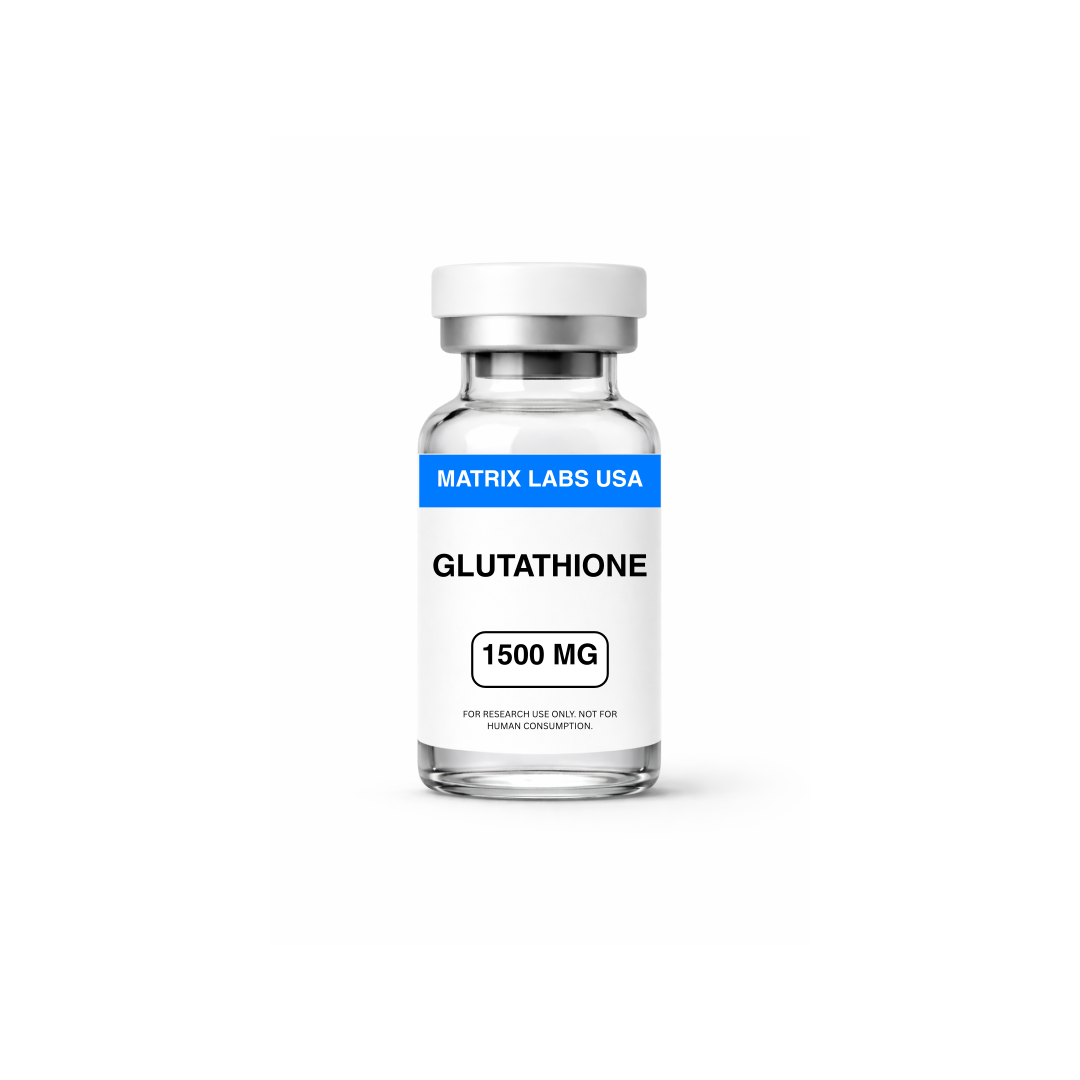
Glutathione
$65.00
Contents: 1500mg Glutathione lyophilized in sterile glass vial
Purity: ≥99% (HPLC verified by independent third-party laboratory)
Grade: Research-use only (not a drug, food, or supplement)
Form: Lyophilized powder, suitable for reconstitution with appropriate solvent
Storage (before reconstitution): Store at room temperature, protected from heat and light
Storage (after reconstitution): Store refrigerated at 2–8°C/ 35–45°F and use promptly according to your lab protocol
Note: This product is supplied as a lyophilized powder and should be reconstituted with bacteriostatic water for appropriate research handling.
Most researchers also add BAC Water 3ML to their order for convenience.
For laboratory research only. Not for human consumption, medical, or veterinary use.
Glutathione is a naturally occurring tripeptide composed of glutamate, cysteine, and glycine. It is one of the body’s primary intracellular antioxidants and plays a central role in oxidative balance, detoxification, and cellular defense. In clinical and experimental settings, glutathione has been studied in relation to oxidative stress, liver function, and redox-dependent cellular processes.
Note: This product is supplied as a lyophilized powder and should be reconstituted with bacteriostatic water for appropriate research handling.
Most researchers also add BAC Water 3ML to their order for convenience.
For laboratory research only. Not for human consumption, medical, or veterinary use.
Glutathione exists in reduced and oxidized forms and is essential to intracellular redox regulation. It is present in nearly all cells and is closely tied to antioxidant systems, detoxification pathways, and mitochondrial function. In laboratory and wellness settings, glutathione is often used in reduced form and handled carefully due to its sensitivity to oxidation.
Glutathione has been explored in research involving:
• Oxidative stress and redox biology
• Liver support and detoxification pathways
• Mitochondrial and cellular resilience studies
• Skin and pigmentation-related research
• Neurologic and metabolic stress modelsBecause of its broad biological relevance, glutathione appears in a wide variety of experimental and translational settings.
Glutathione functions as a major antioxidant by neutralizing reactive oxygen species and supporting detoxification reactions. It also works alongside glutathione peroxidase, glutathione reductase, and related enzyme systems to maintain intracellular redox balance. In addition, it contributes to cellular defense against oxidative damage, supports mitochondrial function, and plays a role in phase II detoxification.
Experimental studies have investigated glutathione in models of oxidative injury, toxin exposure, hepatic stress, and mitochondrial dysfunction. In these settings, glutathione has been associated with improved redox balance and support of cellular protective systems. It has also been studied in pigmentation-related research and in broader models involving inflammation and stress resilience.
• Meister, A. Glutathione metabolism and biological significance
• Pompella, A. et al. The role of glutathione in detoxification and antioxidant defense
• Lu, S. C. Regulation of glutathione synthesis and function
• Research literature on redox biology, liver support, and glutathione pathwaysTo protect experimental integrity, store peptides cold, dry, and shielded from light to minimize oxidation, contamination, and degradation. For near-term use, keep unopened material refrigerated at ≤4 °C (≤39 °F) and limit time at room temperature during handling. Lyophilized (dry) peptides can tolerate short periods at room temperature, but refrigeration is preferred for best stability and longevity. For longer-term storage, keep unmixed material frozen—−18 °C (0 °F) is acceptable, while −80 °C (−112 °F) is optimal for multi-month to multi-year preservation. Avoid frost-free freezers and repeated freeze–thaw cycles, which can accelerate breakdown. If reconstituted (in solution), use sterile buffer (ideally pH 5–6 when feasible), split into aliquots, and freeze (preferably −80 °C (−112 °F)) to reduce handling-related degradation.
All Articles and product information provided on this website are for informational and educational purposes only.
Popular products
-

Tesamorelin
$60.00 Select options This product has multiple variants. The options may be chosen on the product page -
NAD+
$125.00 Select options This product has multiple variants. The options may be chosen on the product page -
KPV
Price range: $40.00 through $65.00 Select options This product has multiple variants. The options may be chosen on the product page -
GHRP-2
$30.00 Select options This product has multiple variants. The options may be chosen on the product page
Reviews
There are no reviews yet.