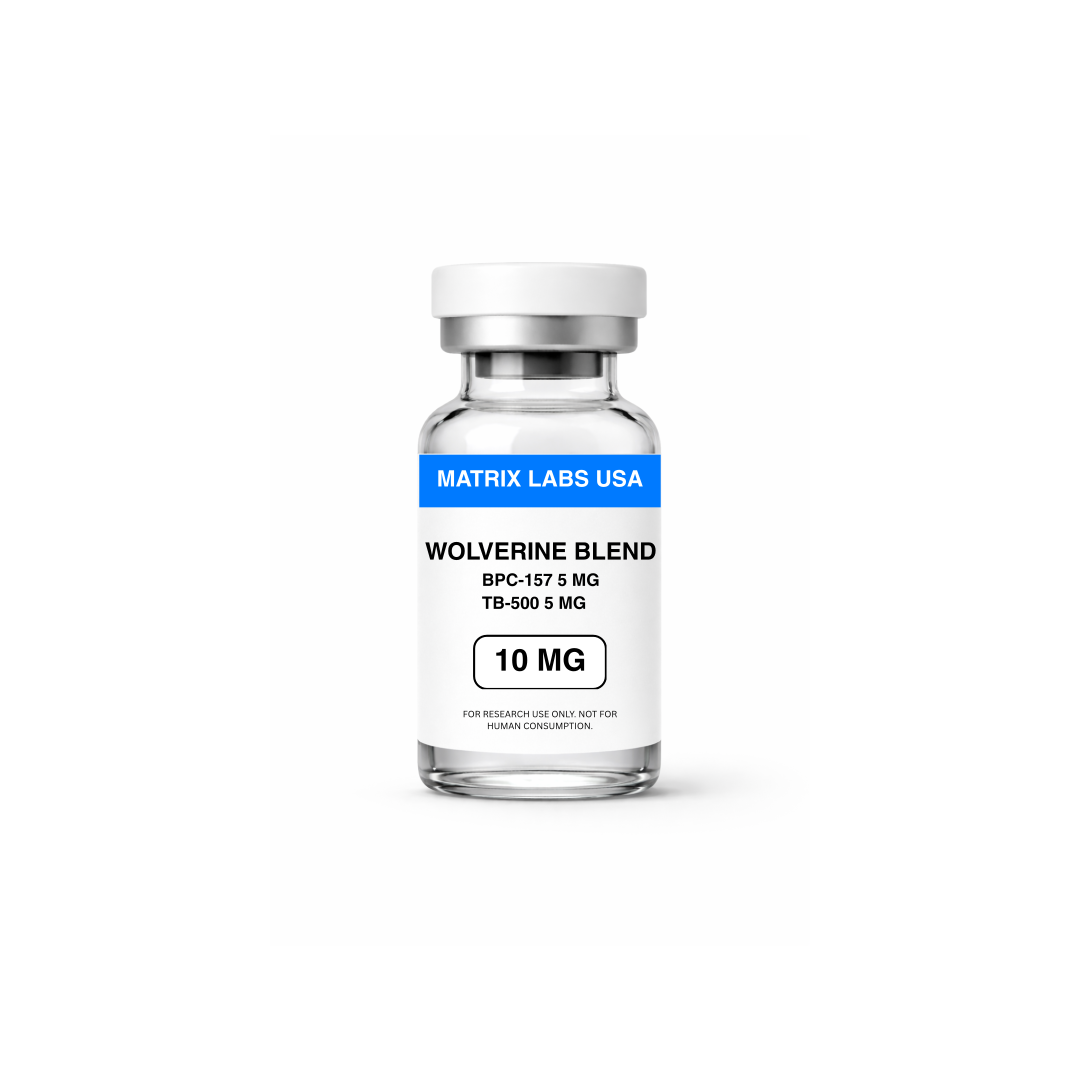
Wolverine
$100.00
Contents: 10mg Wolverine Blend lyophilized peptide blend in sterile glass vial
Composition: 5mg BPC-157 + 5mg TB-500 (10mg total peptide content)
Purity: ≥99% combined peptide content (HPLC verified by independent third-party laboratory)
Grade: Research-use only (not a drug, food, or supplement)
Form: Lyophilized peptide blend, suitable for reconstitution with appropriate solvent
Storage (before reconstitution): Store at room temperature, protected from heat and light
Storage (after reconstitution): Store refrigerated at 2–8°C and use promptly according to your lab protocol
Note: This product is supplied as a lyophilized powder and should be reconstituted with bacteriostatic water for appropriate research handling.
Most researchers also add BAC Water 3ML to their order for convenience.
For laboratory research only. Not for human consumption, medical, cosmetic, or veterinary use.
Wolverine (BPC-157 + TB-500) is a combined research formulation that pairs (1) BPC-157, a 15–amino acid peptide widely examined in experimental injury and repair models, with (2) TB-500, a thymosin β4–related research peptide commonly discussed in the context of cytoskeletal dynamics, cell migration, and tissue remodeling. As a combined research concept, the rationale is typically to evaluate whether signaling-level effects attributed to BPC-157 and motility/actin-related effects attributed to thymosin-derived peptides can influence distinct bottlenecks within coordinated repair processes (e.g., recruitment, matrix organization, vascular support, and remodeling).
Note: This product is supplied as a lyophilized powder and should be reconstituted with bacteriostatic water for appropriate research handling.
Most researchers also add BAC Water 3ML to their order for convenience.
For laboratory research only. Not for human consumption, medical, cosmetic, or veterinary use.
BPC-157 is a pentadecapeptide (15 aa). A commonly referenced experimental sequence is GEPPPGKPADDAGLV (reported as a stable “gastric pentadecapeptide” in tendon-focused work).
TB-500 is frequently discussed as a thymosin β4–related peptide. In analytical literature examining “TB-500” products, TB-500 has been identified as the N-terminal acetylated 17–23 fragment of human thymosin β4, Ac-LKKTETQ.
Functional framing (research context): thymosin β4 is a well-studied actin-interacting peptide, with structural work describing how thymosin β4 can sequester monomeric actin and influence actin dynamics—mechanistically relevant to migration and cytoskeletal remodeling assays.
This blend is most often positioned for preclinical and in vitro experimental designs where outcomes depend on coordinated cellular participation and remodeling, such as:
Tendon/ligament repair models (histology, collagen organization, functional indices, biomechanical endpoints)
Cell migration / outgrowth assays (e.g., fibroblast or tendocyte behavior, chemotaxis-like readouts, scratch assays)
Cytoskeletal dynamics studies (actin-binding/actin-availability questions, motility phenotypes)
Wound-repair biology and remodeling endpoints (matrix deposition, angiogenesis markers, remodeling vs. inflammation phase transition signals)
Working hypothesis for combination testing:
BPC-157 has been investigated in tendon-focused systems where it is associated with cellular programs relevant to repair (including signaling that may influence fibroblast responsiveness and proliferative capacity under growth cues).
Thymosin β4–related peptides are commonly tied to actin-mediated motility. Structural findings on thymosin β4 describe actin sequestration mechanisms that can shape the availability of actin monomers and downstream filament dynamics—core determinants of migration and cytoskeletal reorganization in cell-based assays.
In “TB-500” analytical characterization work, TB-500 has been identified as Ac-LKKTETQ, linking the TB-500 label to a specific thymosin β4 fragment in at least some commercial contexts (important for experimental controls and interpretation).
What this means experimentally: the blend is often treated as a way to test whether a signaling-supportive environment (often attributed to BPC-157 in certain models) plus enhanced motility readiness (often attributed to thymosin/actin biology) produces additive effects on migration kinetics, matrix organization, or functional recovery endpoints—a hypothesis that must be demonstrated with combination vs. single-agent arms.
Tendon injury model (in vivo): In a rat Achilles tendon transection model, BPC-157 has been reported to improve multiple recovery indicators (biomechanical properties, functional measures, and histologic features consistent with organized repair).
Tendon fibroblast biology (in vitro): In tendon fibroblasts, BPC-157 has been reported to increase growth hormone receptor expression and to enhance proliferative responses when growth hormone is added, providing a mechanistic angle for fibroblast responsiveness in tendon-relevant systems.
TB-500 identity and thymosin β4 mechanism relevance: Independent analytical work has identified TB-500 as Ac-LKKTETQ (a thymosin β4 fragment) in at least one investigated TB-500 product, while independent structural biology on thymosin β4 supports mechanistic linkage to actin dynamics that underlie migration and remodeling assays.
Starešinić, M., et al. (2003). Gastric pentadecapeptide BPC 157 accelerates healing of transected rat Achilles tendon and in vitro stimulates tendocytes growth.
Chang, C.-H., et al. (2014). Pentadecapeptide BPC 157 enhances the growth hormone receptor expression in tendon fibroblasts.
Esposito, S., et al. (2012). Synthesis and characterization of the N-terminal acetylated 17–23 fragment of thymosin beta 4 identified in TB-500, a product suspected to possess doping potential.
Irobi, E., et al. (2004). Structural basis of actin sequestration by thymosin-beta4: implications for WH2 proteins.
Philp, D., et al. (2004). Thymosin beta4 promotes angiogenesis, wound healing, and hair follicle development.
Sikiric, P., et al. (2014). Stable gastric pentadecapeptide BPC 157–NO-system relation (reviewed mechanistic context across models).
To protect experimental integrity, store peptides cold, dry, and shielded from light to minimize oxidation, contamination, and degradation. For near-term use, keep unopened material refrigerated at ≤4 °C (≤39 °F) and limit time at room temperature during handling. Lyophilized (dry) peptides can tolerate short periods at room temperature, but refrigeration is preferred for best stability and longevity. For longer-term storage, keep unmixed material frozen—−18 °C (0 °F) is acceptable, while −80 °C (−112 °F) is optimal for multi-month to multi-year preservation. Avoid frost-free freezers and repeated freeze–thaw cycles, which can accelerate breakdown. If reconstituted (in solution), use sterile buffer (ideally pH 5–6 when feasible), split into aliquots, and freeze (preferably −80 °C (−112 °F)) to reduce handling-related degradation.
All Articles and product information provided on this website are for informational and educational purposes only.
Popular products
-

KPV
Price range: $40.00 through $65.00 Select options This product has multiple variants. The options may be chosen on the product page -
Tesamorelin
$60.00 Select options This product has multiple variants. The options may be chosen on the product page -
Ipamorelin
$55.00 Select options This product has multiple variants. The options may be chosen on the product page -
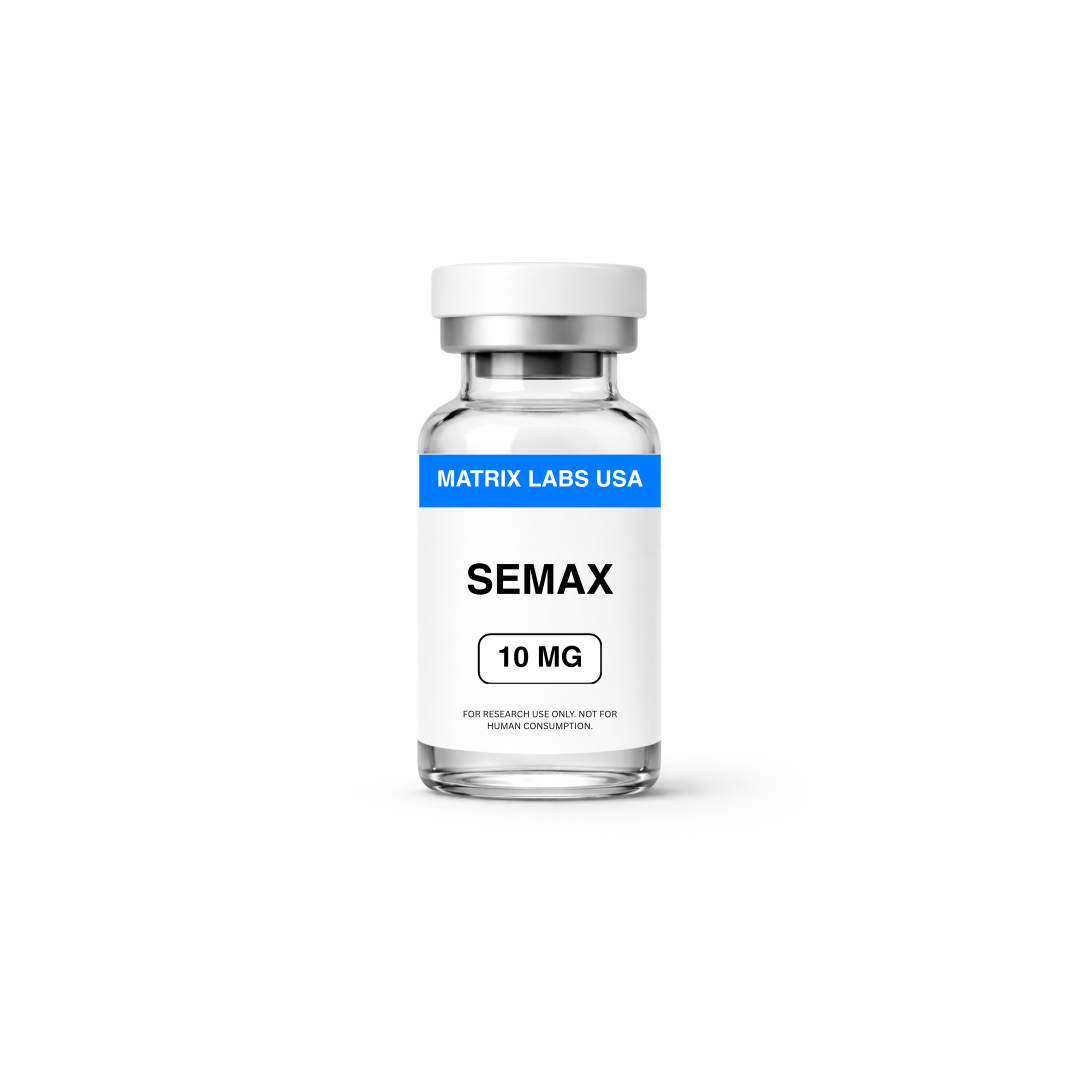
Semax
$50.00 Select options This product has multiple variants. The options may be chosen on the product page
Reviews
There are no reviews yet.