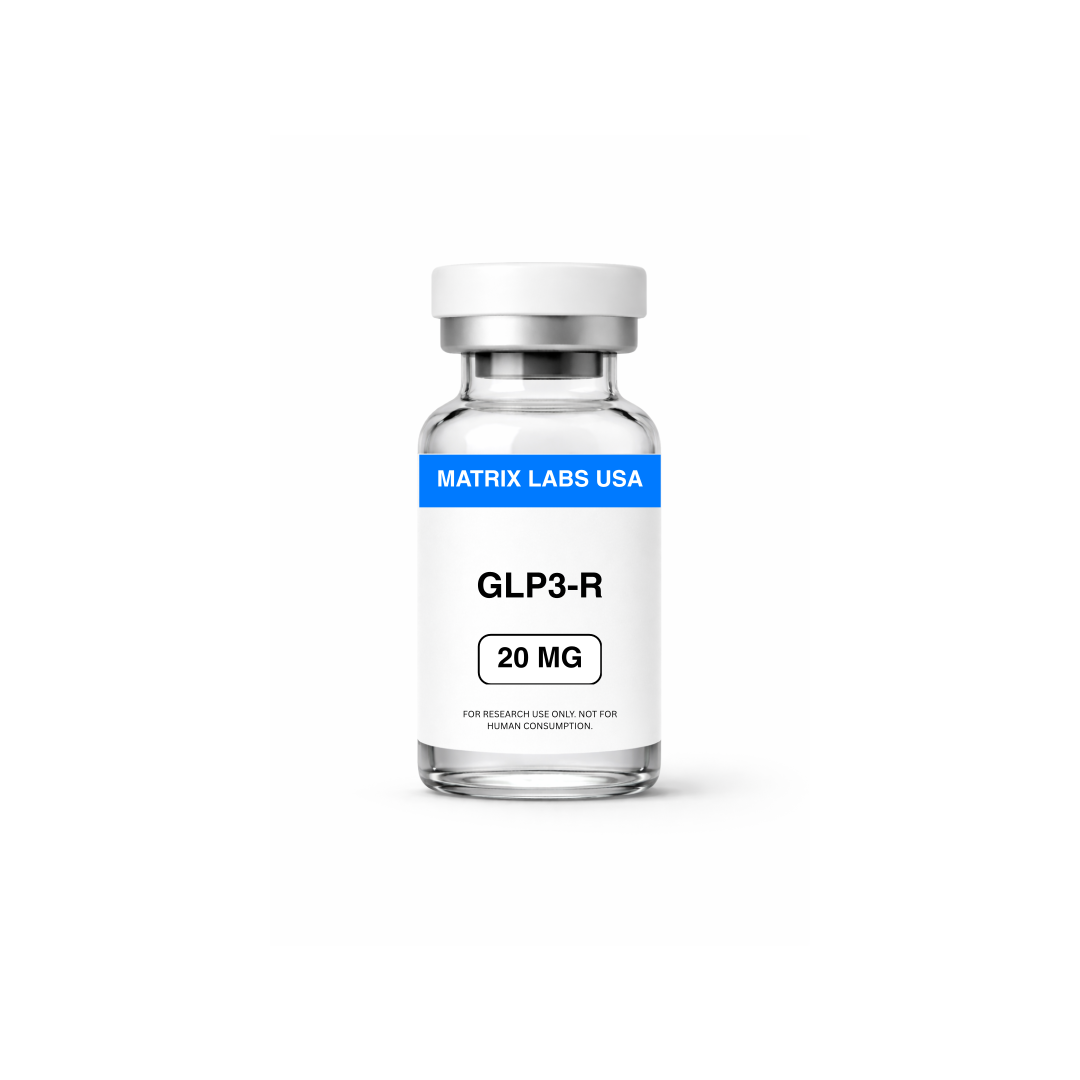
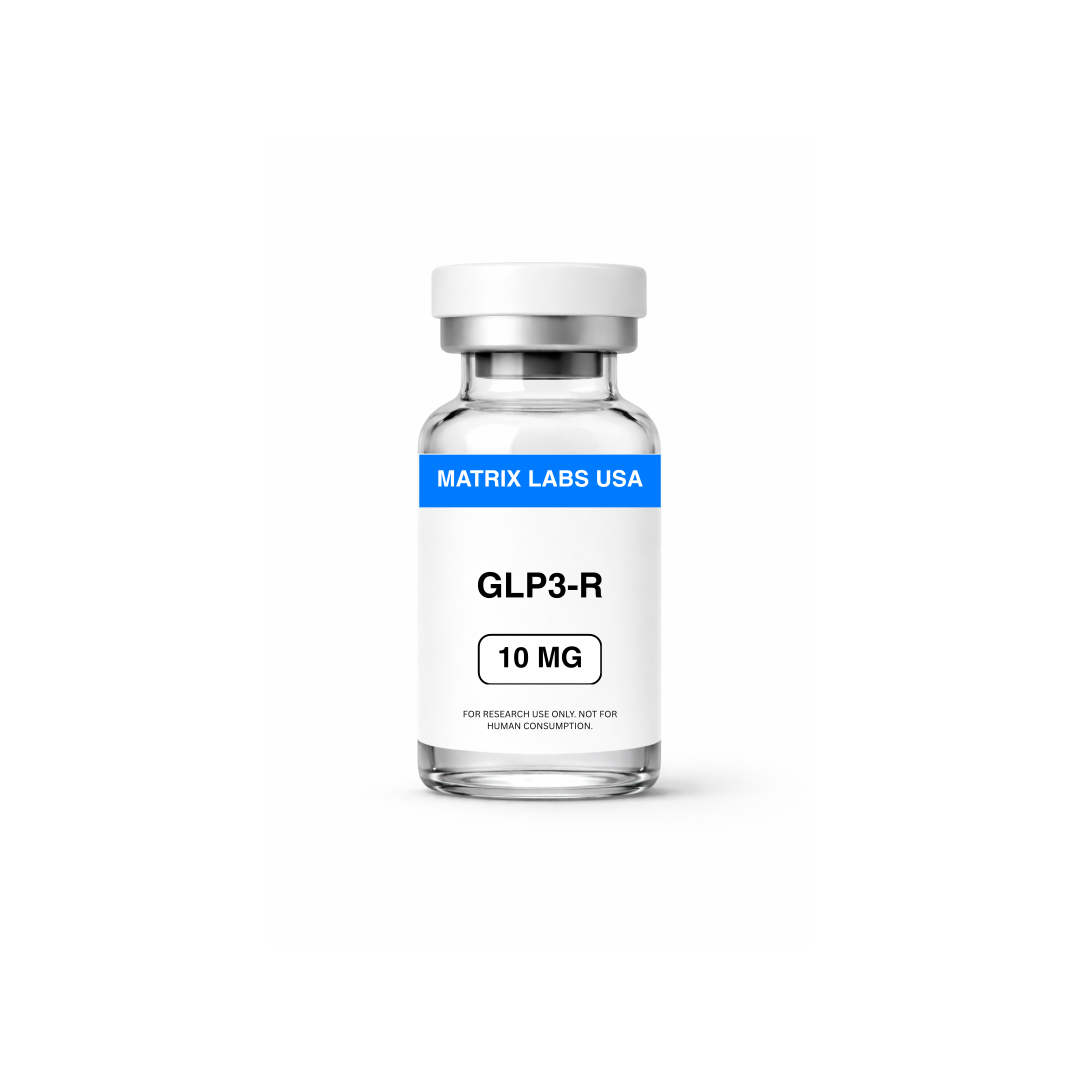
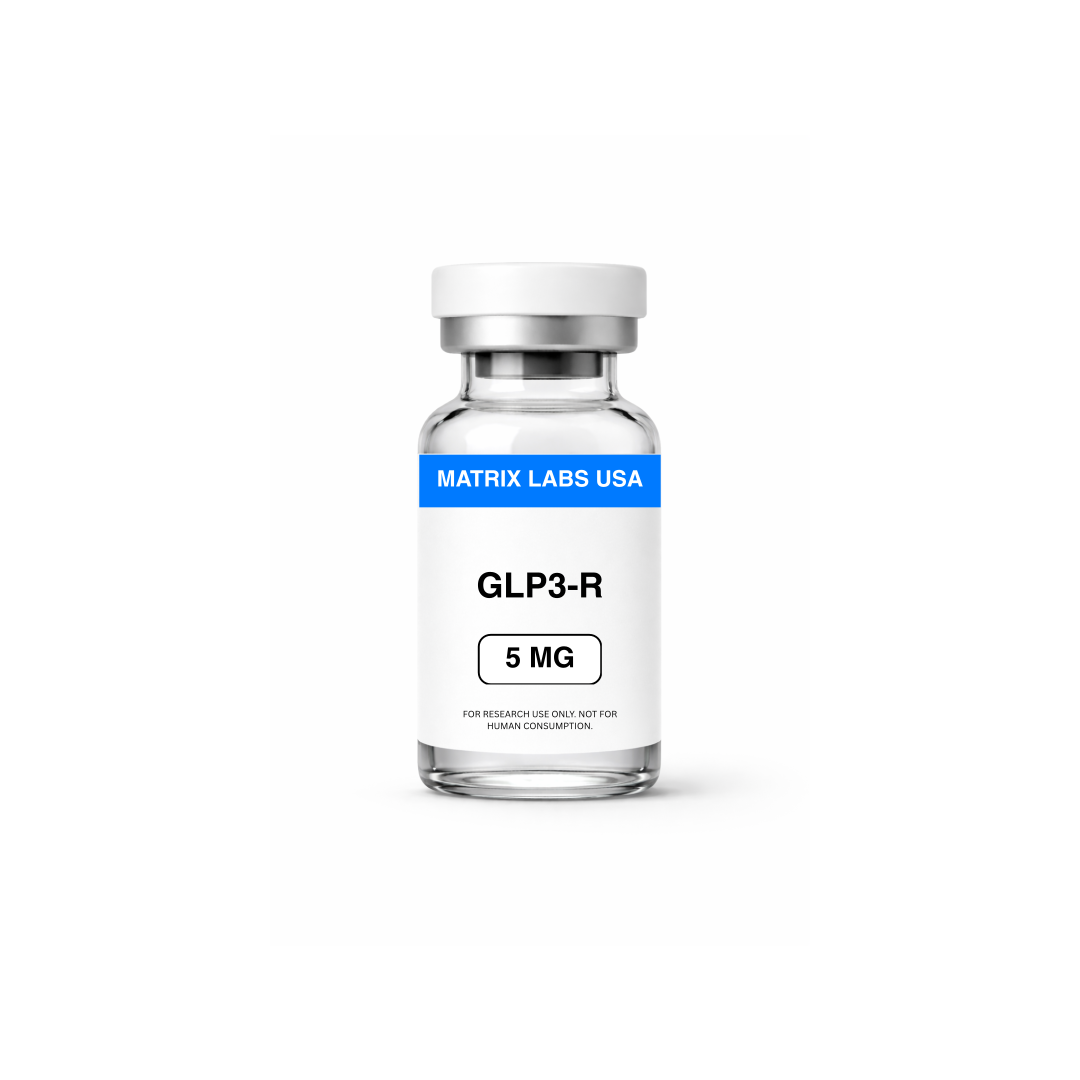

GLP3-R
Price range: $100.00 through $280.00
Contents: GLP3-R lyophilized peptide in sterile glass vial
Available strengths: 5mg, 10mg, and 20mg (select desired strength before checkout)
Purity: ≥99% (HPLC verified by independent third-party laboratory)
Grade: Research-use only (not a drug, food, or supplement)
Form: Lyophilized powder, suitable for reconstitution with appropriate solvent
Storage (before reconstitution): Store at room temperature, protected from heat and light
Storage (after reconstitution): Store refrigerated at 2–8°C and use promptly according to your lab protocol
Note: This product is supplied as a lyophilized powder and should be reconstituted with bacteriostatic water for appropriate research handling.
Most researchers also add BAC Water 3ML to their order for convenience.
For laboratory research only. Not for human consumption, medical, or veterinary use.
GLP3-R (also reported as LY3437943) is a modified peptide tri-agonist used in research as a single-molecule input that activates the glucagon receptor (GCGR), glucose-dependent insulinotropic polypeptide receptor (GIPR), and glucagon-like peptide-1 receptor (GLP-1R).
In experimental pharmacology, GLP3-R is commonly used to study how concurrent GCGR, GIPR, and GLP-1R agonism shapes integrated metabolic signaling, with attention to receptor potency balance, energy expenditure versus intake effects, and durable pathway engagement enabled by protraction chemistry.
Note: This product is supplied as a lyophilized powder and should be reconstituted with bacteriostatic water for appropriate research handling.
Most researchers also add BAC Water 3ML to their order for convenience.
For laboratory research only. Not for human consumption, medical, or veterinary use.
GLP3-R is described as a 39–amino-acid single peptide conjugated to a C20 fatty diacid moiety, a design used to extend exposure and support once-weekly pharmacology in studied systems.
Molecular formula: C221H342N46O68
Molecular weight: 4731.34
CAS: 2381089-83-2
Sequence representation (KEGG): YXQGTFTSDYSILLDKKAQXAFIEYLLEGGPSSGAPPPS
In vitro profiling reported for LY3437943 describes balanced GCGR and GLP-1R activity with greater GIPR activity, framing the molecule as a potency-weighted tri-agonist rather than three matched single-target ligands.
GLP3-R is used in receptor pharmacology assays to quantify integrated agonism across GCGR, GIPR, and GLP-1R, including cAMP-linked signaling readouts and comparative efficacy experiments versus mono-agonist and dual-agonist incretin ligands.
It is also used in preclinical obesity and metabolic models to test how tri-agonism distributes weight and glycemic effects across energy intake suppression and energy expenditure elevation, with receptor contribution inferred through potency tuning and comparator designs.
In early-phase clinical research contexts, retatrutide has been evaluated with dose-escalation paradigms to characterize safety, pharmacokinetics consistent with prolonged action, and pharmacodynamic endpoints such as body weight and glycemic measures, supporting its use as a long-duration agonist tool in translational study designs.
GLP3-R engages three class B GPCR targets that are commonly studied through Gs-coupled signaling and cAMP generation, enabling mechanistic experiments that map receptor-specific and combined downstream outputs across endocrine tissues and central pathways.
Triagonism is often framed as combining the anorectic and insulinotropic features attributed to GLP-1 and GIP signaling with glucagon-linked increases in energy expenditure, creating an experimental lever to test whether receptor multiplexing produces additive or emergent pathway effects.
In obese-mouse studies reported for LY3437943, body weight reduction has been described as arising from reduced calorie intake driven by GIPR and GLP-1R activity plus an added component of GCGR-mediated increases in energy expenditure.
Discovery and preclinical work for LY3437943 reports decreased body weight and improved glycemic control in obese mice, with mechanistic interpretation that GCGR activity augments weight loss by increasing energy expenditure on top of incretin-driven reductions in energy intake.
Broader triagonist literature in diet-induced obesity models describes unimolecular GLP-1R/GIPR/GCGR polypharmacology as a strategy that can normalize body weight in mice and highlights GCGR potency as a differentiator for maximal weight-lowering capacity under those experimental conditions.
A phase 1b multiple-ascending-dose study in participants with type 2 diabetes describes an acceptable safety profile and pharmacokinetics consistent with once-weekly dosing for LY3437943, with pharmacodynamic findings supporting continued clinical investigation.
Coskun, T., et al. (2022). LY3437943, a novel triple glucagon, GIP, and GLP-1 receptor agonist for glycemic control and weight loss: From discovery to clinical proof of concept. Cell Metabolism.
Urva, S., et al. (2022). LY3437943, a novel triple GIP, GLP-1, and glucagon receptor agonist in people with type 2 diabetes: a phase 1b, multicentre, double-blind, placebo-controlled, randomised, multiple-ascending dose trial. The Lancet (S0140-6736).
Jastreboff, A. M., et al. (2023). Triple–Hormone-Receptor Agonist for Obesity. New England Journal of Medicine.
Finan, B., et al. (2022). Next generation GLP-1/GIP/glucagon triple agonists normalize body weight in obese mice. Molecular Metabolism (open access in PMC).
KEGG DRUG: Retatrutide (USAN) entry D12430 (formula, molecular weight, sequence representation, targets).
Abouelmagd, A. A., et al. (2025). Efficacy and safety of retatrutide, a novel GLP-1, GIP, and glucagon receptor agonist for obesity treatment: a systematic review and meta-analysis of randomized controlled trials.
To protect experimental integrity, store peptides cold, dry, and shielded from light to minimize oxidation, contamination, and degradation. For near-term use, keep unopened material refrigerated at ≤4 °C (≤39 °F) and limit time at room temperature during handling. Lyophilized (dry) peptides can tolerate short periods at room temperature, but refrigeration is preferred for best stability and longevity. For longer-term storage, keep unmixed material frozen—−18 °C (0 °F) is acceptable, while −80 °C (−112 °F) is optimal for multi-month to multi-year preservation. Avoid frost-free freezers and repeated freeze–thaw cycles, which can accelerate breakdown. If reconstituted (in solution), use sterile buffer (ideally pH 5–6 when feasible), split into aliquots, and freeze (preferably −80 °C (−112 °F)) to reduce handling-related degradation.
All Articles and product information provided on this website are for informational and educational purposes only.
Popular products
-

GLP2-T
Price range: $180.00 through $280.00 Select options This product has multiple variants. The options may be chosen on the product page -
GLP1-S
$180.00 Select options This product has multiple variants. The options may be chosen on the product page
Reviews
There are no reviews yet.